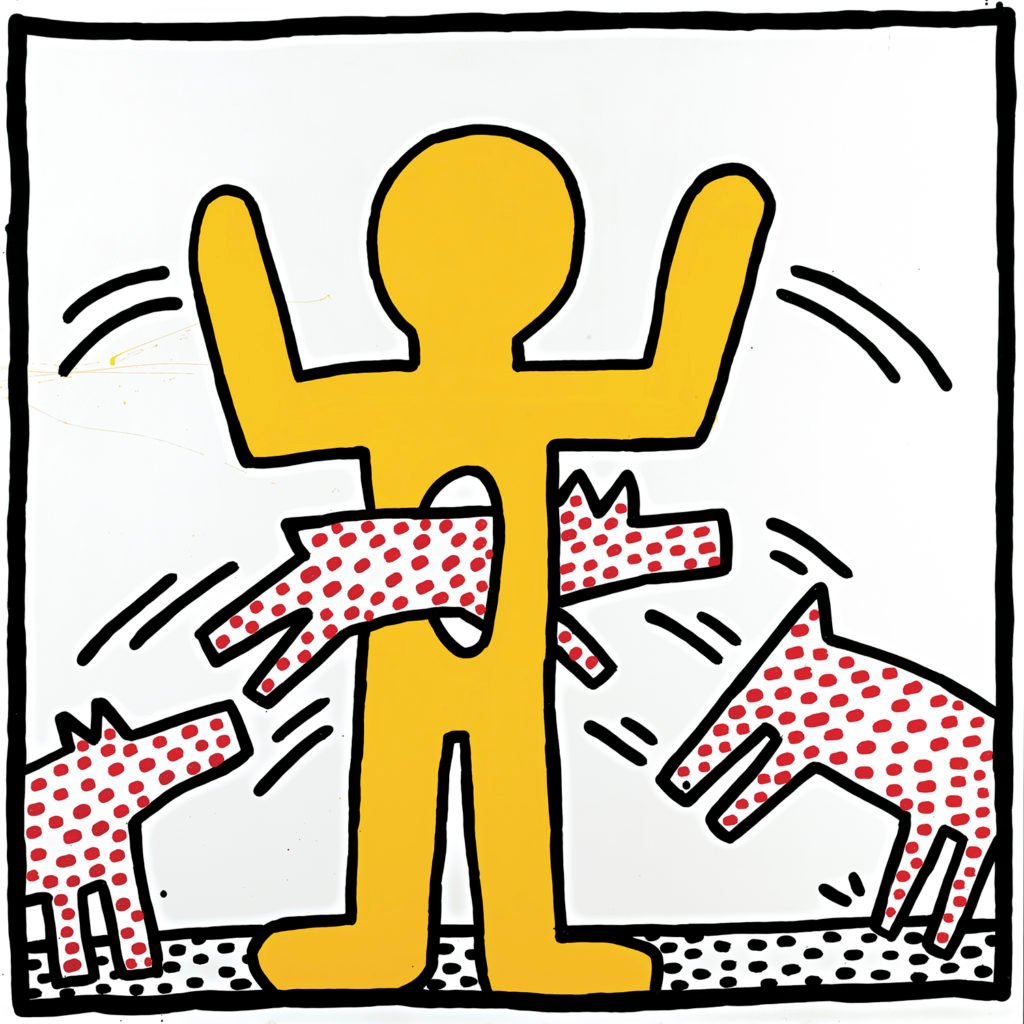
Name of Keith Haring Art With Dog Jumping Through Man
If he was still alive, Keith Haring (1958-90) would be 60 this year. To mark the 30th anniversary of the US artist's untimely expiry at age 31, the Albertina Museum in Vienna is surveying the artist's piece of work from a new perspective. "Keith Haring.The Alphabet" (on view until June 24) is giving center stage to the symbolism that Haring created, revealing the sources that inspired the old street artist who studied semiotics while at the School of Visual Arts in New York.
Egyptian hieroglyphics were an important source of inspiration for Haring's visual language, according to the Albertina. His pictorial vocabulary is being brought to the fore for the first time at the Austrian museum, where 100 works by the creative person are on view.
"I am intrigued with the shapes people choose as their symbols to create linguistic communication." Haring said. "In that location is within all forms a basic structure, an indication of the entire object with a minimum of lines, that becomes a symbol. This is mutual to all languages, all people, all times."
In the alphabet of picture-words he adult, each recurring image carries its own set of meanings. Some we already know well, such as Haring's "radiant baby," which is a symbol of the future and perfection. Others are simply as prevalent but notwithstanding not completely understood.
Hither are some of the almost fascinating meanings behind Haring's personal and politically charged art alphabet.
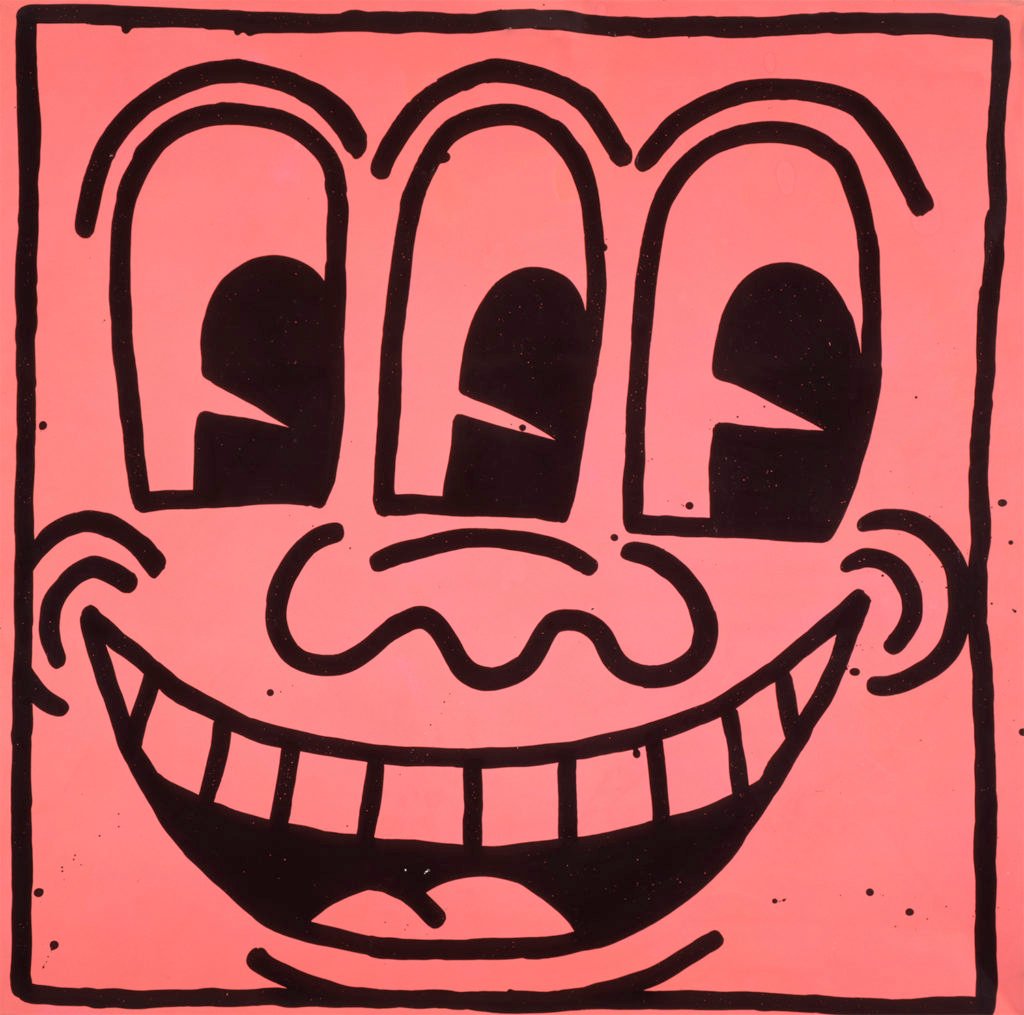
Keith Haring Untitled, (1981) Courtesy of The Brant Foundation, Greenwich, Connecticut, The states. © The Keith Haring Foundation.
The Oversupply
In Haring's ouevre, crowds conveyed an image of strength but they could be a negative or a positive phenomenon. In some cases, the oversupply was depicted as a powerful and invincible united front against oppression. Haring explained that seeing the Vietnam War and race riots on television at the impressionable historic period of 10 years one-time had a huge affect on his political and social concerns. To Haring, the crowd could too represent a mob that could exist hands led off-target by simulated gods or dictators. He was aware of horrors such as the Jonestown massacre in 1978, when more than 900 people committed mass suicide led by the cult'south leader, Jim Jones. The image of crowds also reference tragedy and murder in Haring'due south work.
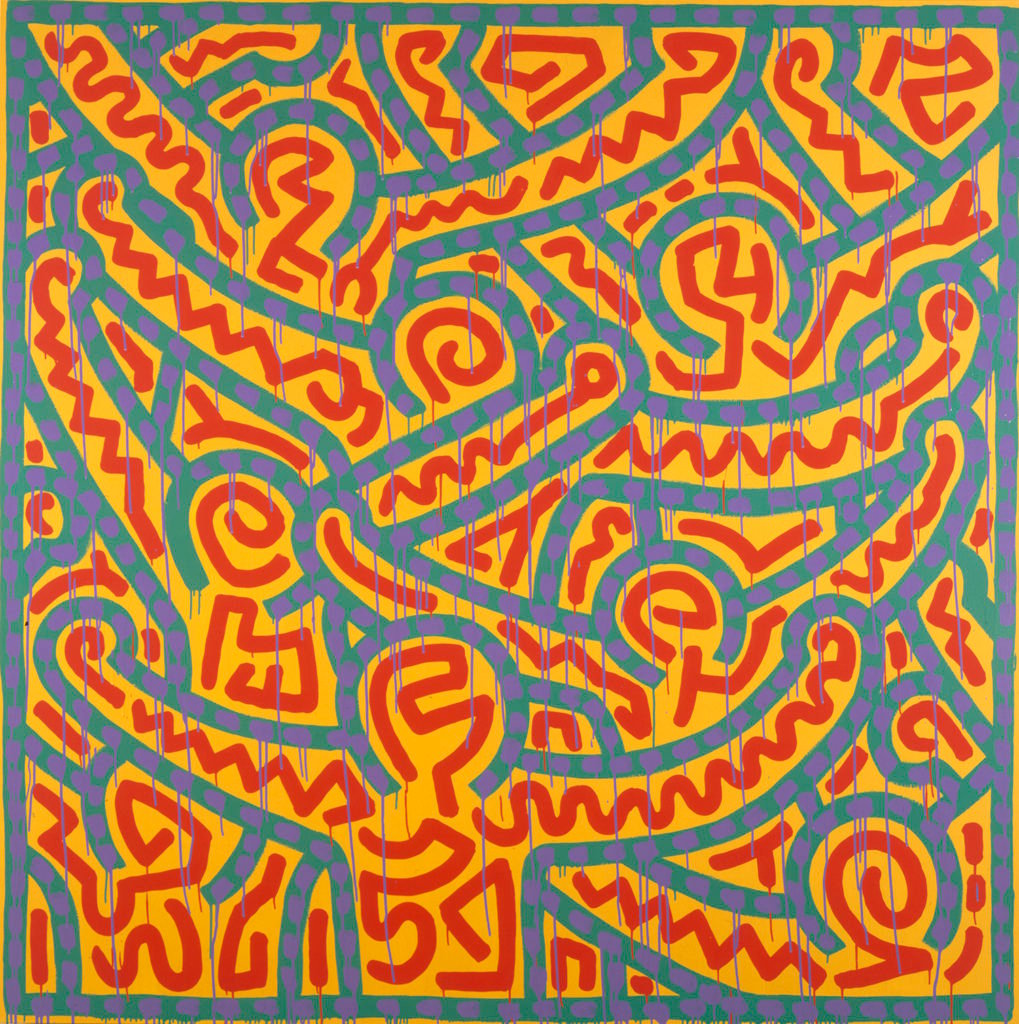
Keith Haring Untitled (1989). © The Keith Haring Foundation.
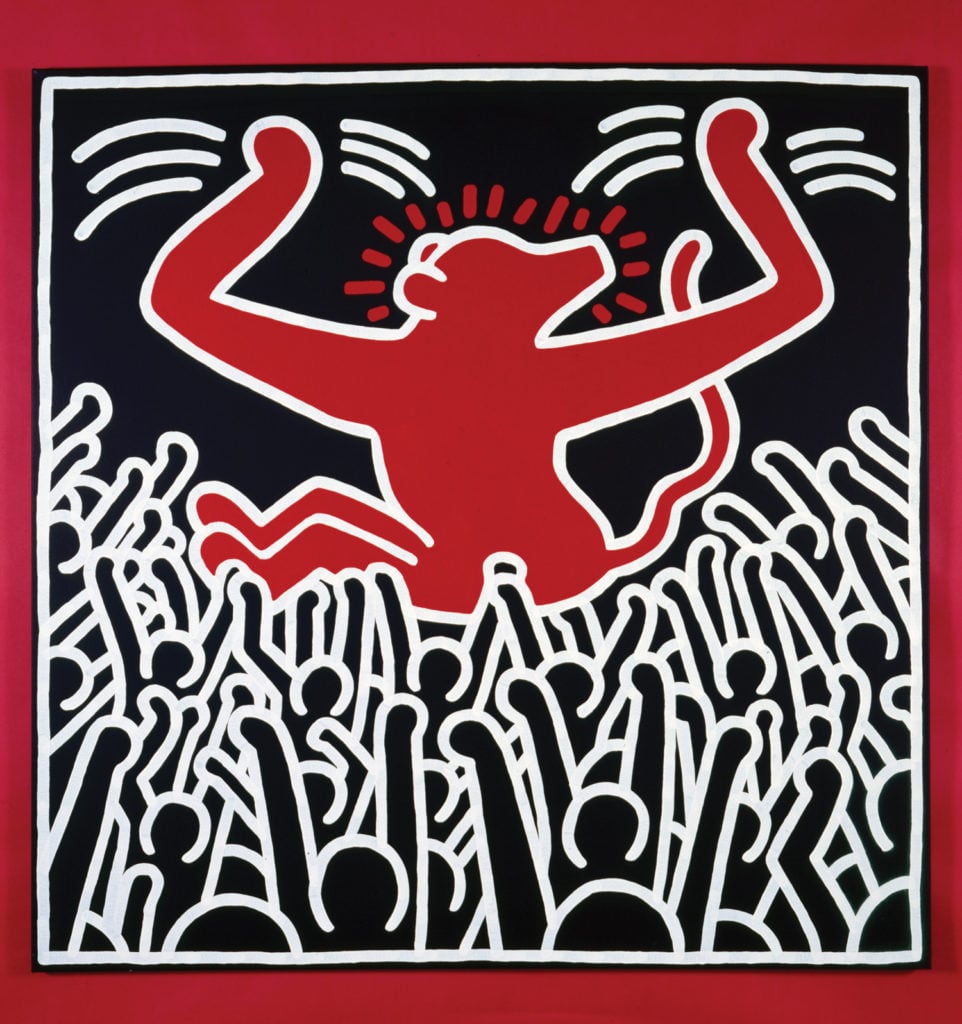
Keith Haring Untitled (1985) Private collection. © The Keith Haring Foundation
The Cross
Haring was grew up in a religious family, and the connotations of the cross throughout his works are the subject of argue. Haring rejected fundamentalist Christianity and all dogmas, and his work is critical of the fashion the church could suppress its population. The crosses are sometimes pictured on screens, and they are ofttimes used as a device to commit torture or murder, with others standing by. Whether he rejected his upbringing or not, his biblical references prove his knowledge of Christian stories, like the martyrdom of Saint Peter who was hung upside down on a cross.
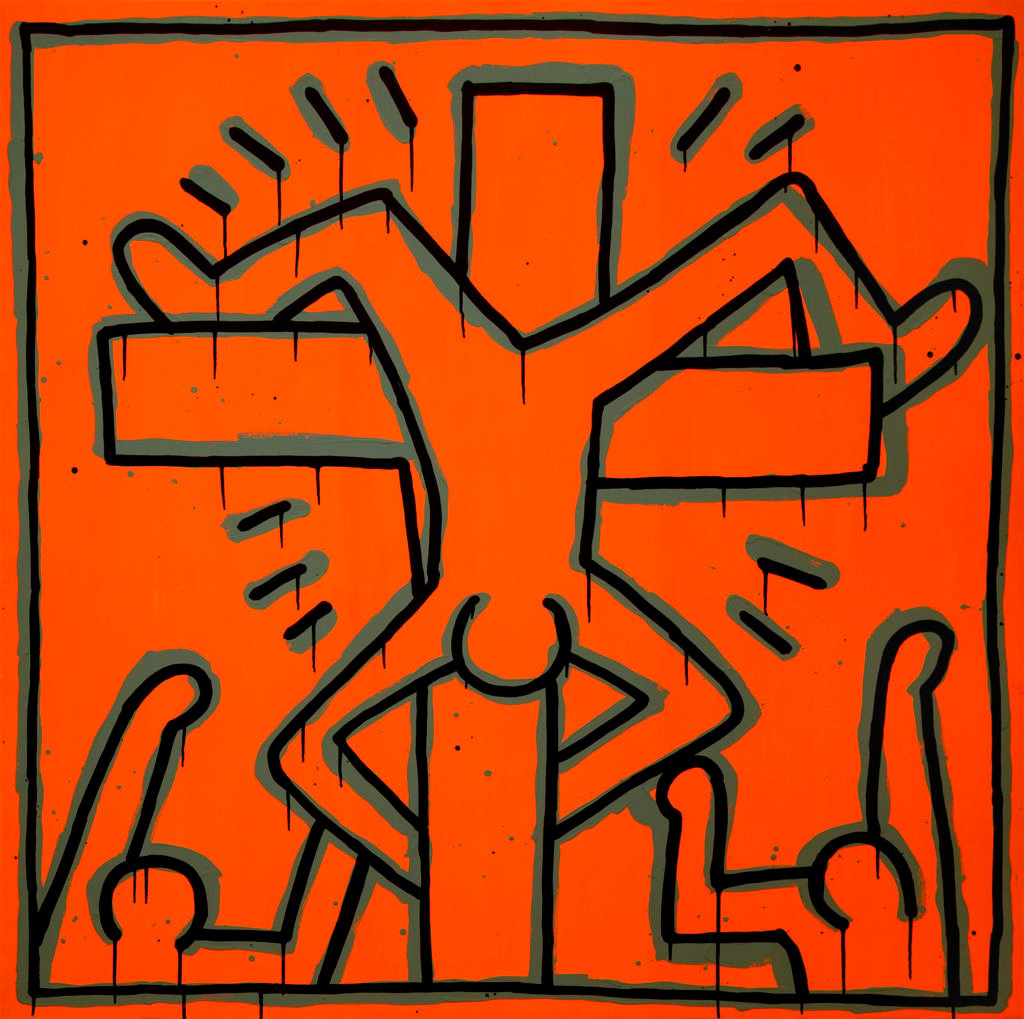
Keith Haring Untitled (1984). Private collection, courtesy of Skarstedt Gallery © The Keith Haring Foundation.
The Canis familiaris
Dogs dancing, barking or bitter recurred frequently within Haring's work and developed into an iconic image associated with the creative person. What after became a dog really started out as an undefined creature, and Haring'southward domestic dog (often depicted on two anxiety) can all-time be understood as a mythical representation of a man.
Dancing dogs oftentimes referenced artistic performance or breakdancing, only Haring's dogs as well stood for Anubis, the Ancient Egyptian god with a jackals' head who watches over the dead.
In Haring's versions, the prototype of dogs playing with or crushing pocket-size human being figures plays into both these Egyptian conceptions of life and death, but also the Christian thought of the "trip the light fantastic toe of the dead."
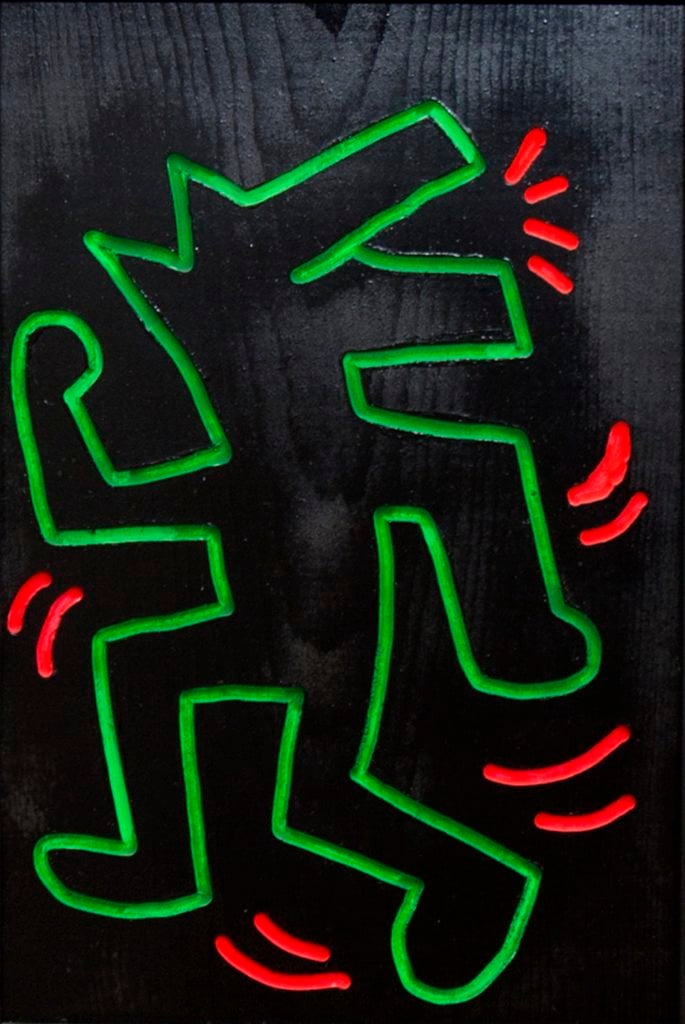
Keith Haring Untitled. (1983). Gerald Hartinger Fine Arts, Vienna. © The Keith Haring Foundation.
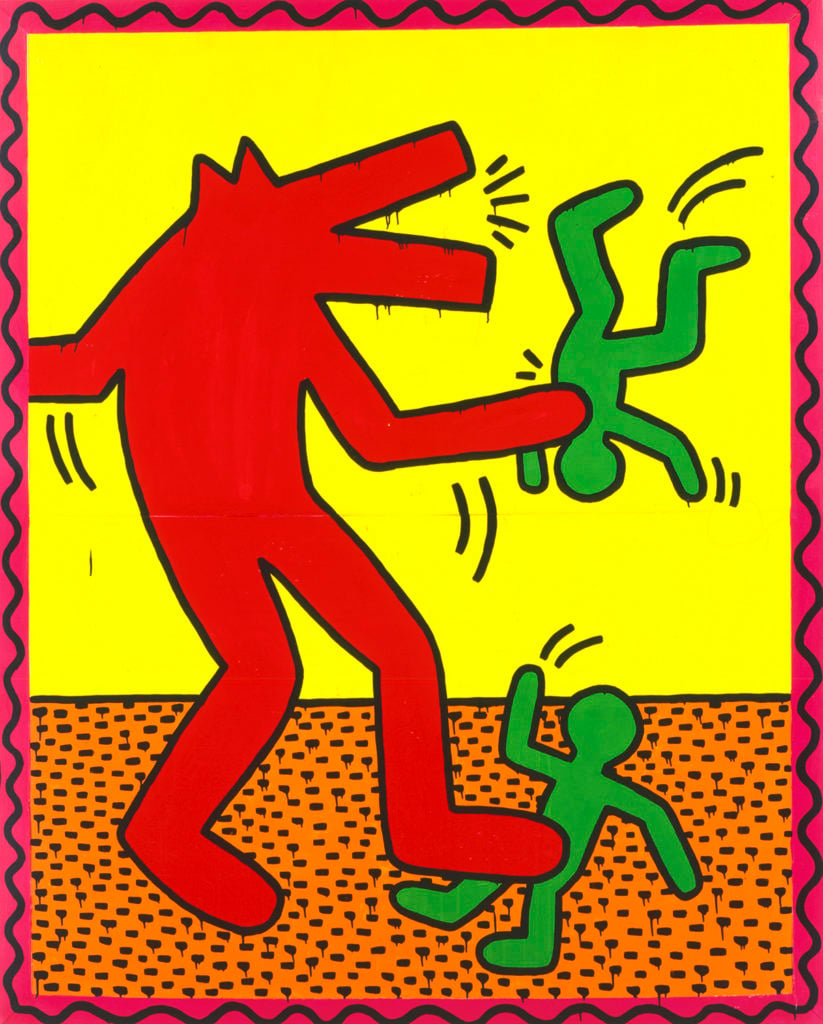
Keith Haring Untitled (1982). © The Keith Haring Foundation
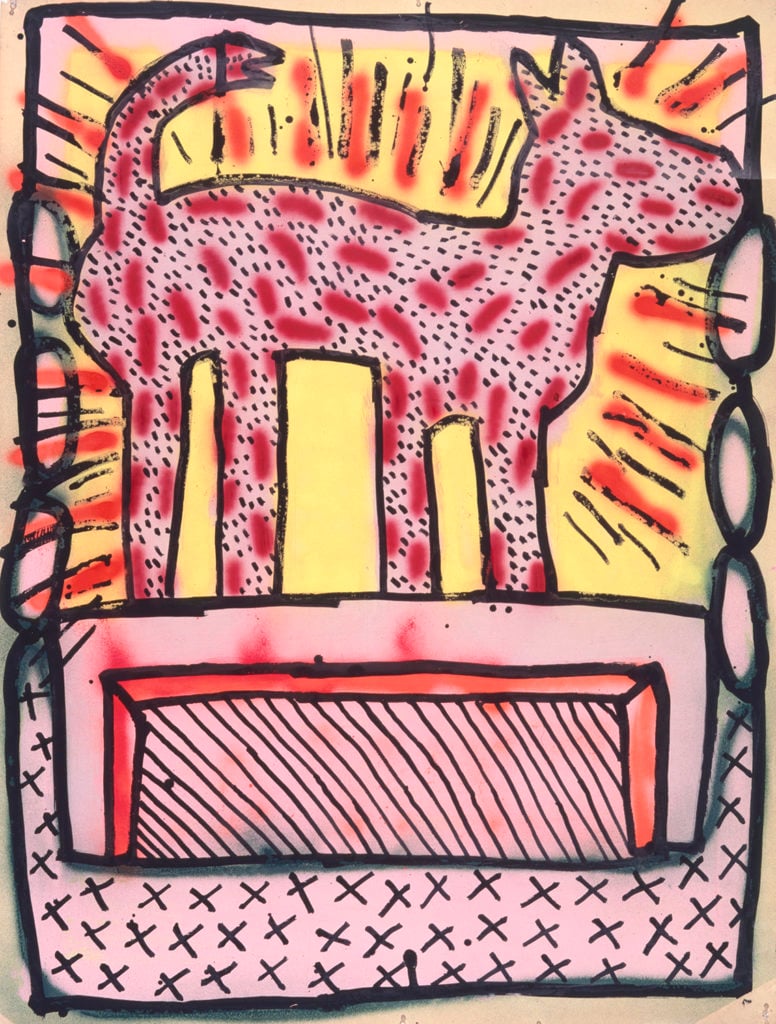
Keith Haring Untitled, (1980).© The Keith Haring Foundation.
Technology: From the Stick to the Radio, Computers, and UFOs
In Haring'due south work the stick was a commonly drawn weapon, chosen as the most basic and readily available way to shell, torture or murder. It was also a source of power, imbued with magic and away to activate creatures, people, and objects in his works with strength.
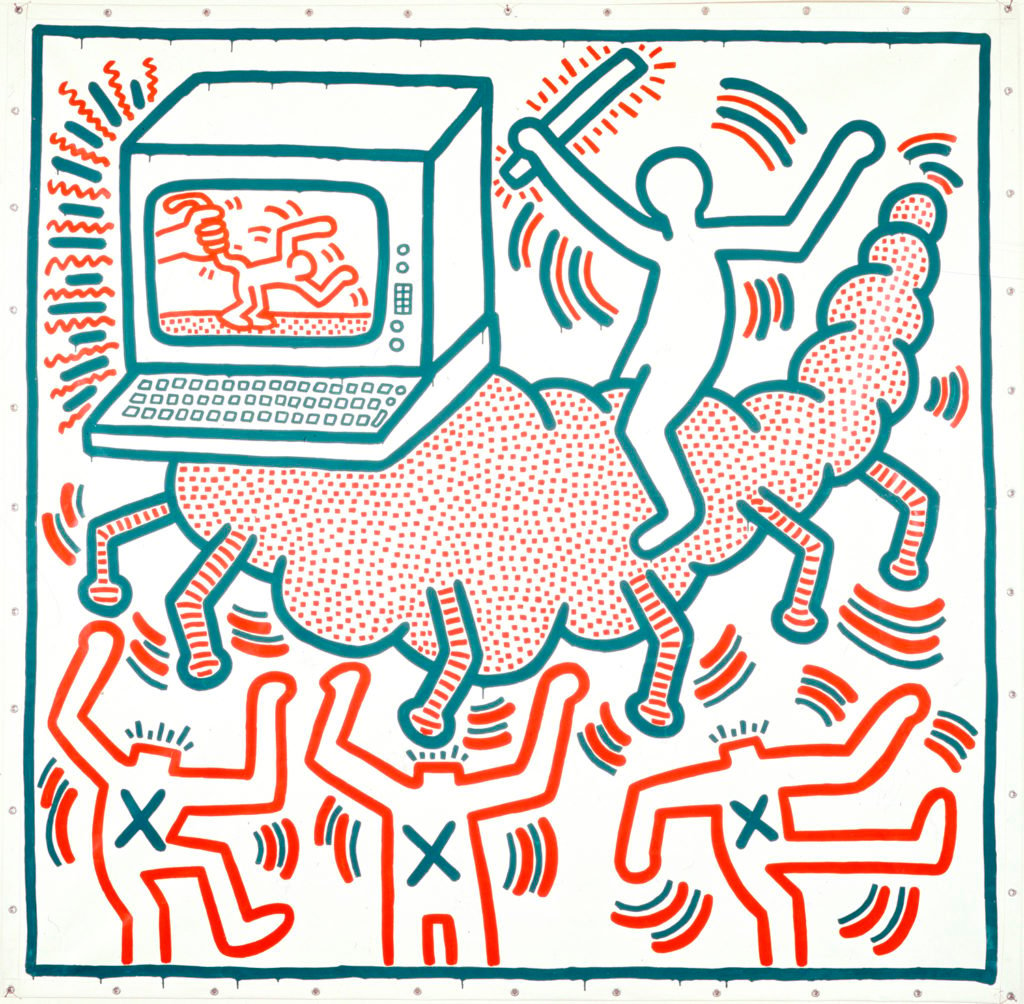
Haring had ambivalent feeling towards engineering science including boob tube, and computers, robots or infinite aged machines are often depicted equally exerting control over humans. Haring predicted in 1978 that silicon fries and computers would become their own life class, transforming humans into being in servitude to the computer, and not the other way around.
In his 1983 Untitled work, the artist depicts a caterpillar with a personal computer for a caput. The caterpillar represents the feeding stage in the creatures transformation into a butterfly, and it sometimes appears as a monster, representing gluttony and greed.
UFOs also represented otherness, and stood for persons who were outside of the social norms. Whereas other technologies were rather cryptic to Haring, flying saucers were always positive and symbolized empowerment.
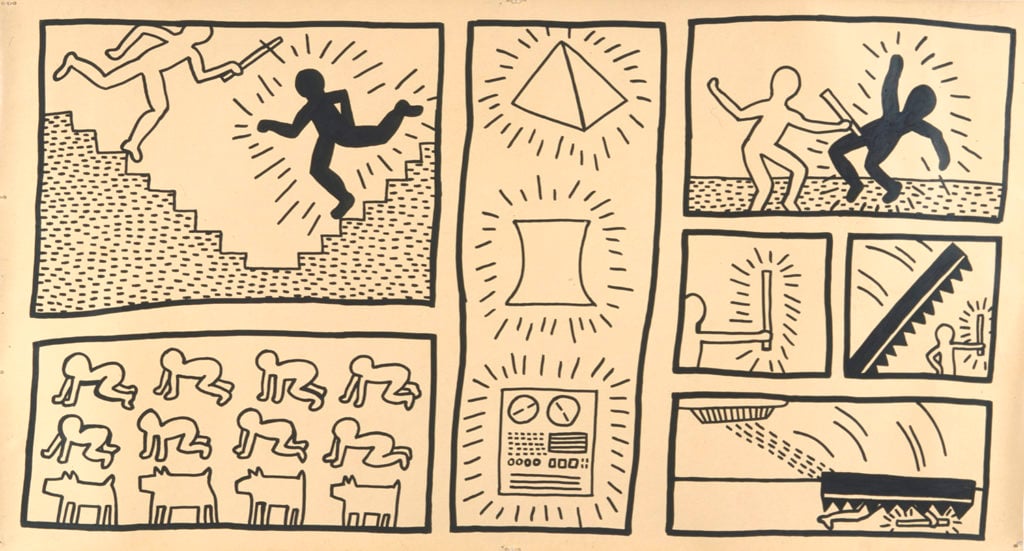
Keith Haring Untitled, (1980) © The Keith Haring Foundation.
Keith Haring Untitled (1983) Drove of KAWS. © The Keith Haring Foundation.
The Effigy With an "X" or a Hole in Its Tum
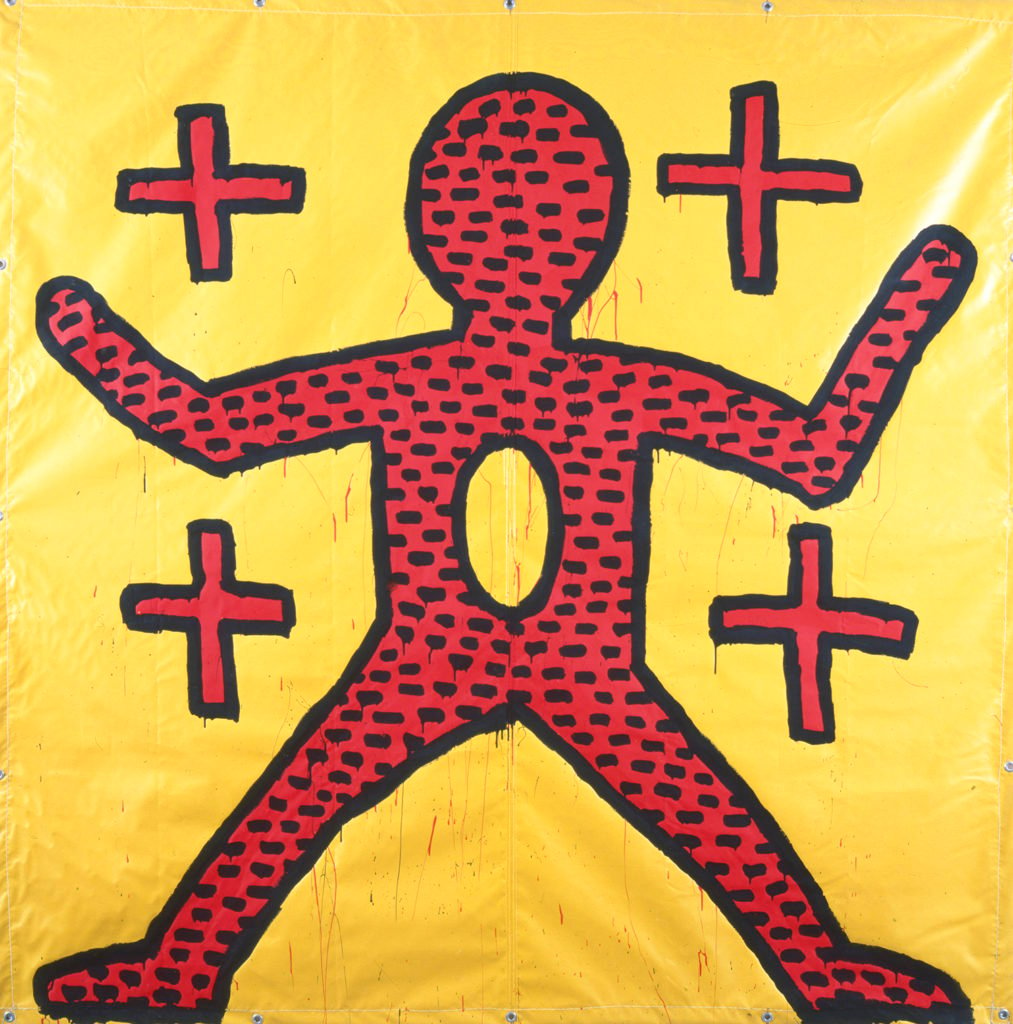
Haring symbolizes the emptiness with all of us, merely the hole that he ofttimes included on his figures was initially a response to the murder of John Lennon past a crazed fan in 1980.
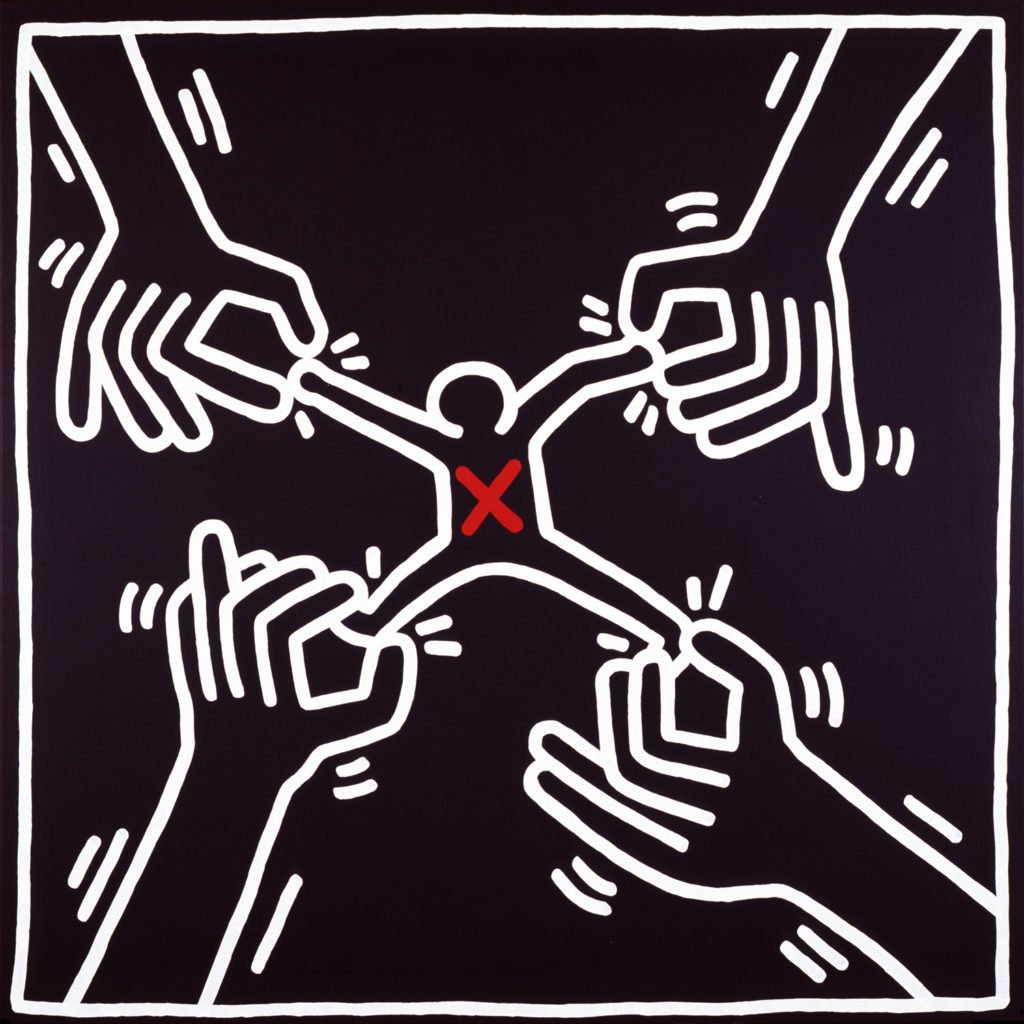
The "X" was a more general argument against the transformation of humans into targets. Sometimes beheaded or with their arms raised in a "don't shoot" gesture, the artist takes a potent stand against events of the time, like the AIDS crunch, the state of emergency during the apartheid-era in South Africa, or the war in Vietnam war.
The dotted figure stands for otherness, including homosexality and skin colour, both foremost political and social concerns for Haring. Later, dots as well signified the otherness of affliction, primarily AIDS.
Keith Haring Untitled, (1981). Museum der Moderne Salzburg, permanent loan from a private collection. © The Keith Haring Foundation.
Keith Haring Untitled (1982). Courtesy of Larry Warsh. © The Keith Haring Foundation.
Keith Haring Untitled (1985) Alona Kagan, United states of america. © The Keith Haring Foundation.
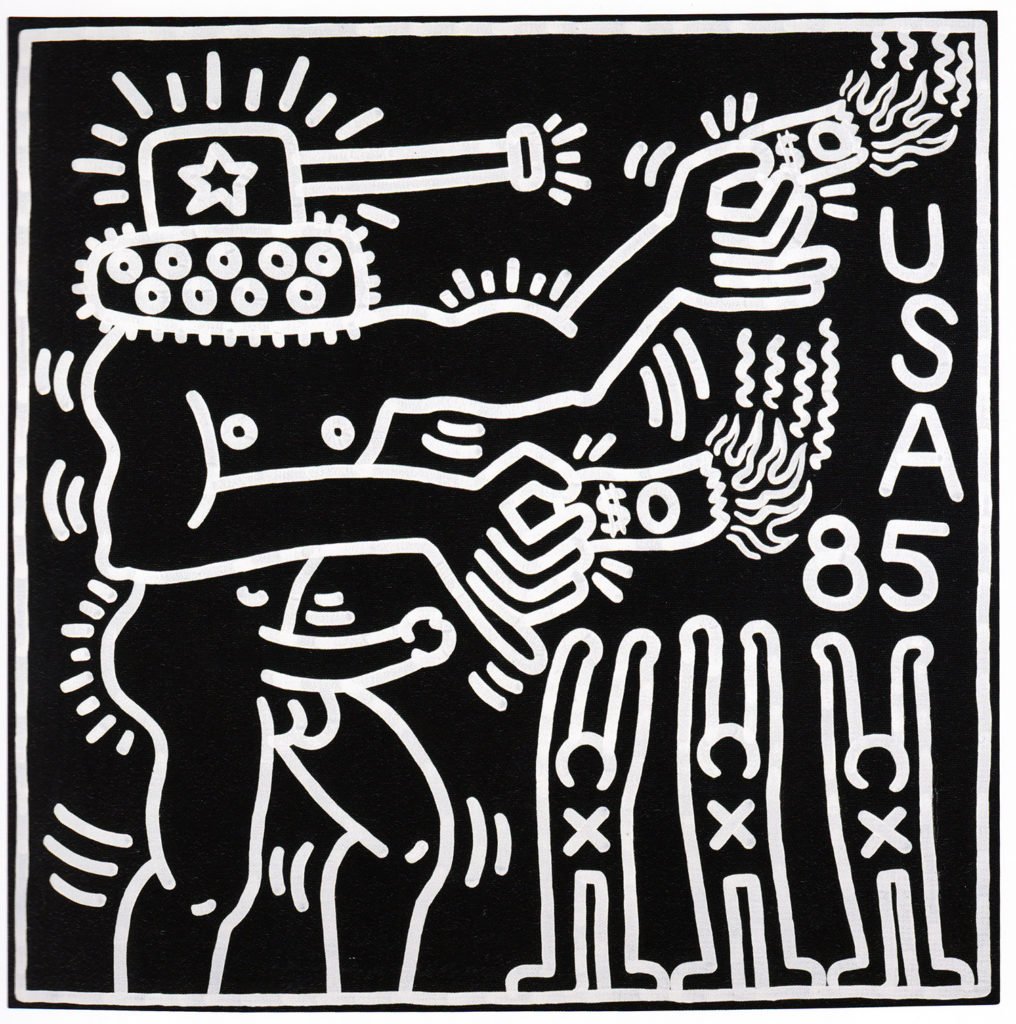
Keith Haring Untitled (1985). Courtesy of The Keith Haring Foundation, New York, and the Gladstone Gallery, New York and Brussels. © The Keith Haring Foundation.
The Cover
Despite the violent imagery that is rampant in Haring's work, his fundamental message was 1 of devout humanism and beloved. Take his recurring embrace, which is often between 2 genderless and race-less figures, who are glowing as they agree each other.
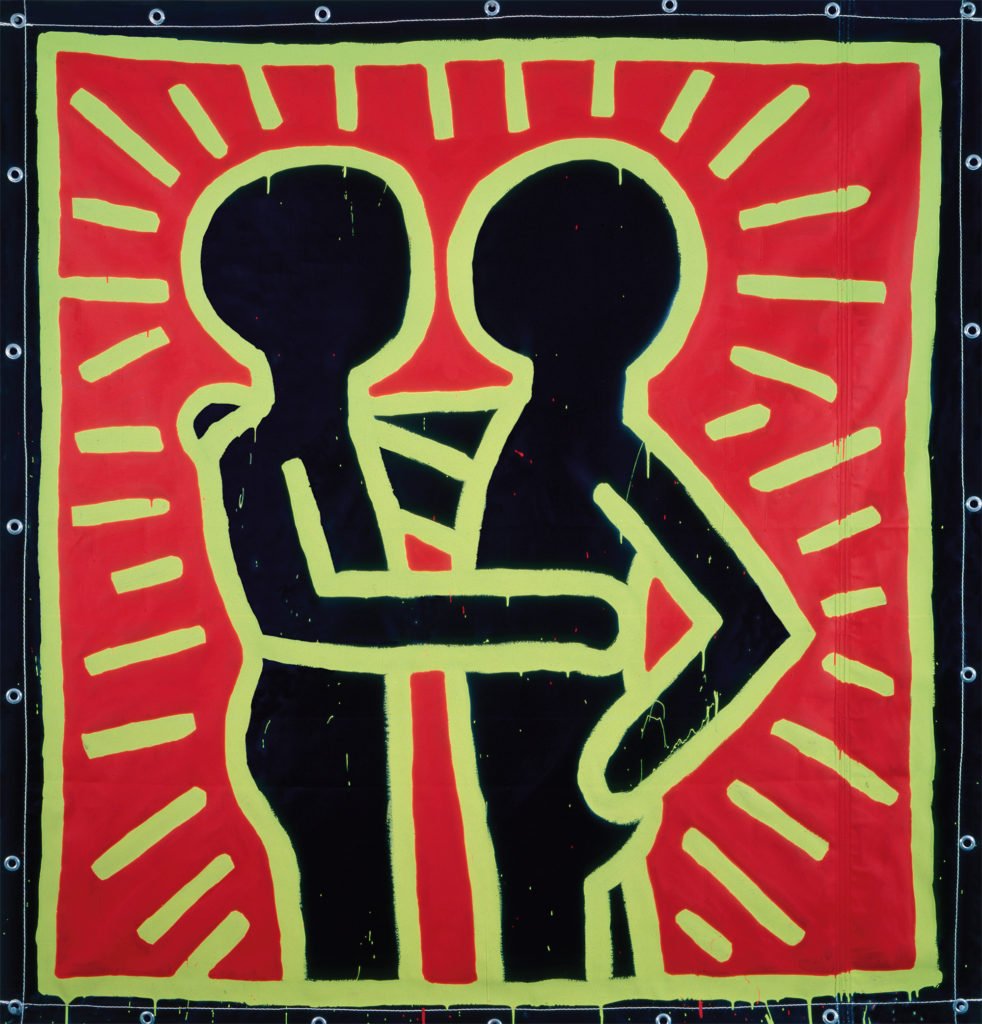
Keith Haring Untitled, (1982). Private collection. © The Keith Haring Foundation.
Follow Artnet News on Facebook:
Want to stay ahead of the art world? Subscribe to our newsletter to get the breaking news, eye-opening interviews, and incisive disquisitional takes that drive the chat forward.
0 Response to "Name of Keith Haring Art With Dog Jumping Through Man"
Post a Comment